


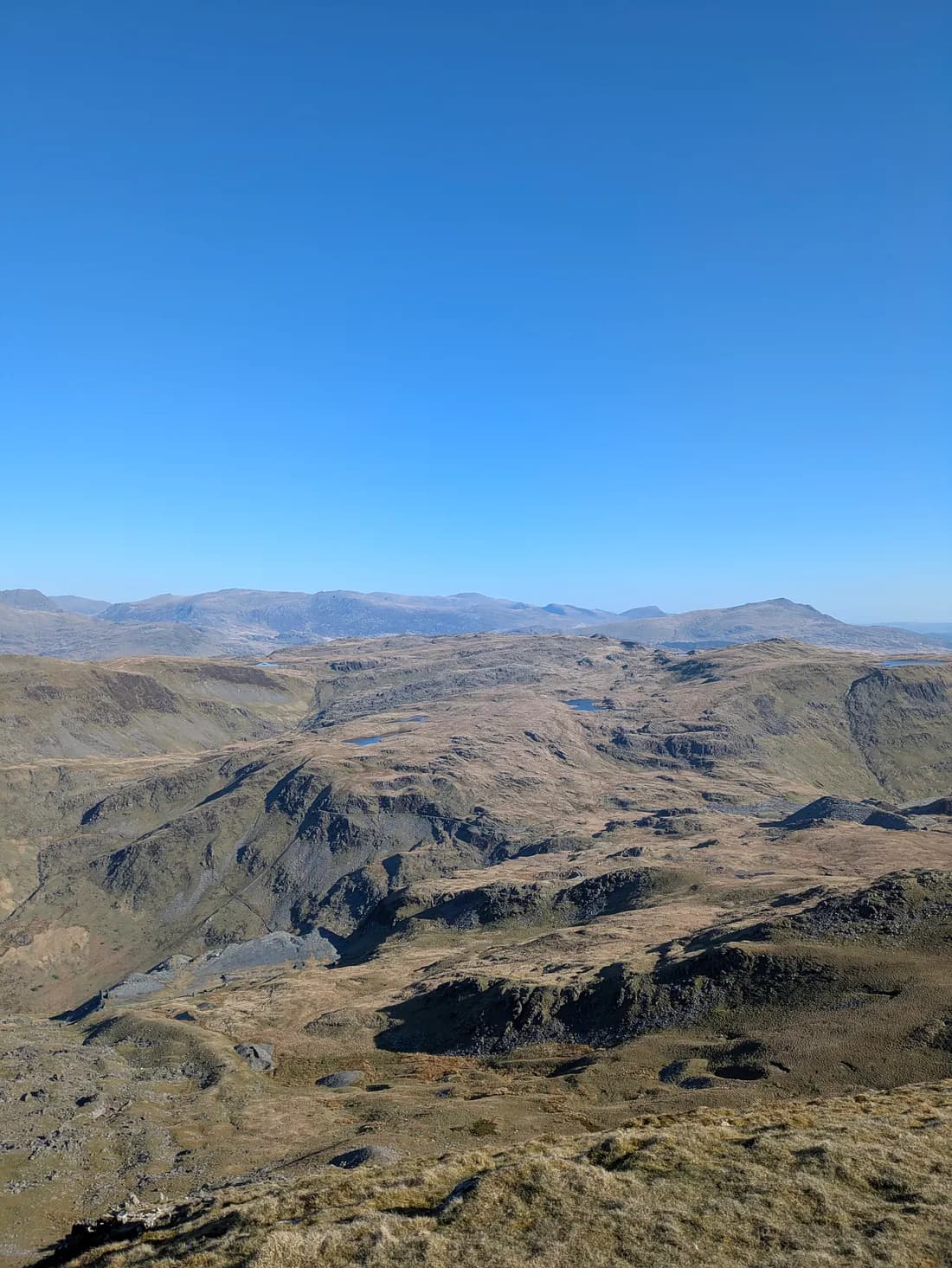
I don't know what inspired me to spend 4 days in solitude in Snowdonia for my birthday.
Sometimes I just make decisions without really questioning the logic. Sometimes it just makes intuitive sense and can be explained later.
The rules of the trip were, no phone (other than text check ins and maps) and on Sunday (my birthday), no eating. Only water for 36 hours.
I didn't even have a plan of where to go. Just thought, Snowdonia - can't go wrong. And I was right.
Why on earth decide to spend your birthday alone? This is one of the questions that I had to retrospectively answer, and it wasn't glaringly obvious.
I suppose the main reason was to prove to myself that I could. Every year for my birthday I've done something special. I had my 18th in Amsterdam, my 21st in Berlin and Amsterdam, my 23rd, 24th in Glasgow, 25th in Vietnam, 26th in Glasgow, and my 30th in Lisbon. And plenty of memorable nights out and meals on the other ones. Every single time it has been great so I'm not traumatised by memories of bad birthdays.
Spending a birthday alone, after not seeing anyone for the previous 2 days, was bizarre. Unlike the other 4 days in Snowdonia, there was a persistent pressure to enjoy myself which was annoying. "Have fun ya bastard, its yer birthday!".
I was finishing Into the Wild while away, reading the book while watching the sunset on my birthday, the late insight from Alexander Supertramp that happiness is better shared was fitting for the situation. As much as I love solitude and do have many moments of joy and peace by myself, the best times of our lives are with other people. It's an inescapable truth. I was just glad that I would get to return from my trip in one piece and continue making memories with others off the back of this insight, but I truly believe that spending time alone makes us better people to be around for others.
I believe that it is our job to spend time alone from time to time. Ideally in nature. Otherwise we are never really ourselves. As social creatures, we are in many ways just a reflection of the people we are around. That's why our accents change depending on who we're around, our sense of humour changes, most things about us are changeable depending on who's there. But when we're alone, it's a chance for us to develop as an individual without any input from others. And being alone in nature is an opportunity to see who we are in relationship to nature. Something historically we'd do every day but now, many of us spend an entire lifetime without ever really having an understanding of our relationship to nature.
I rarely experience loneliness, I regularly go for long hikes on my own, I've spent long stints of time by myself over the years and although I miss people from time to time, I never feel lonely. During this trip though, getting absolutely battered off the wind while watching the sun setting into the sea, I felt completely alone and craved the company of others. Nature was exposing the vulnerabilities at the core of my being. Reminding me of its hostile, destructive side. Roaring at me; 'it's still April lad, you should've brought a bigger coat'. During the day the sun kept me warm but as the sun was setting, the temperature dropped and the wind refused to let me keep any of the heat the sun had bestowed on me throughout the day.
The wind refuses to let you enjoy yourself. It refuses to be ignored for a second. The wind was a terrible companion. It made it impossible to relax and enjoy the scenery. As incredible as the views were, when you're cold and under attack, you just want to be cosy and warm in a pub with Guinness and fish and chips, with your people, having a nice normal birthday weekend.
Other than in this specific instance, I felt no loneliness, no negative emotion at all really, other than an occasional vague melancholic feeling. That's because the rest of the day, there is a clear direction, clear purpose and objective. Keep putting one foot in front of the other. Get up the hill, get to the checkpoint, get to the river for water, get tent up, get dinner made.
Trekking gives us a clear and natural sense of purpose. It's as close to living like our ancestors as it gets in modern life. Until the agricultural revolution 10,000 years ago, we were nomadic people who would carry our gear for long distances, we'd hunt down prey over long distances and have to carry the kill back to base. This behaviour is hard wired into our collective genetic memory. When walking long distances, with weight, through natural landscapes, the meaning of life isn't in question. Especially if you have good company and the means to cook and keep warm with a fire.
In our modern lives we've completely lost touch with our instinctual behaviour. We are not living how we evolved to live. AT ALL. It's blatantly obvious why we're having a cultural existential crisis, identity crisis, and physical and mental health crisis. If everyone replicated the behaviour of our ancestors, walking 8+ miles a day, eating healthy food around the fire with their community every night, everything would be in its right place and we wouldn't be questioning our existence.
After getting battered off the wind for a third consecutive night and crawling out of my tent bleary eyed and foggy headed, I was now 32. Thirty-two entire trips around the sun. What better way to celebrate than by purposely forgoing food and coffee, and walking 11 miles?
Deciding to fast on my birthday; another bold decision with no forethought but makes perfect sense for some reason. Why? Just because. Because it demonstrates intent to the universe, to your unconscious that you're serious. About whatever it is you're serious about. I'd love to say that I was motivated to do this in thought of those who are going hungry. But it was just a personal experiment.
Ultimately doing hard things is transferable to other hard things. So if I can say no to food and coffee on my birthday, I can choose to say no to anything else that doesn't serve me. It's exercise for the mind's 'no' muscle. A test of willpower. A way to show the body that the mind is in charge. A domination of cravings.
This is my main motivation for a lot of things. Sauna, cold showers, running… it's all just practice for making the body do what the mind tells it to. To get better at embracing discomfort and putting values and virtues above comfort and craving. The physical and mental health benefits are firmly in second place. And there are so many health benefits to fasting but that isn't half as important to me as being able to showing myself that I don't need to eat. I can walk 11 miles with my rucksack, just drinking water, and I'll be fine. I'll be content.
Some things taste sweeter than birthday cake. And one of them is self mastery. Another is getting home after 4 days alone and finally getting to see those you want to see. Sleeping in a comfy bed. Drinking a nice coffee, eating your favourite food, but not taking these things for granted like you did before, and realising… knowing, that you don't need these comforts and consumables to be happy.
As I said, the purpose of the trip wasn't glaringly obvious, and does there even really need to be one? Can't we just sometimes do things for the sake of it? Why do we always need to be doing something for something else. To get recognition off peers, for a good body, training for a race. Whatever happened to doing stuff just because it's enjoyable, challenging, character building, just because it's who you are? Like the almighty Goggins preaches; an 'always prepared' mindset. Being good to go at the drop of a hat. Rather than for a specific window of time that we've built up towards.
These types of questions were rattling around the back of my mind as I hiked up Moelwyn Mawr on my final morning in Wales. My favourite hike of the trip. The wind had virtually vanished, and basking at the summit with no top on, enjoying my first nice coffee in 4 days, I felt a sense of accomplishment, pleased with myself for making a bold decision and seeing it through. I felt a sense of elation and connection to the landscape, a deeper connection to myself, that is far too obscured by relentless sensory input from screens and noise during regular life. Fully present, fully alive, connected to existence.
As I soaked in the views, I noticed next to me an incredible corner of Snowdonia. A plateau with six lakes on it, separated by a few hills, surrounded by several peaks. And realised that I'd discovered a new adventure. A place to explore and immerse myself in on a future trip. This was enough of an answer to the meaning of the trip. A reason to come back. A purpose to continue the adventure. Which ended the trip with a comma rather than a full stop, which is how every trip into the wilderness should be ended.